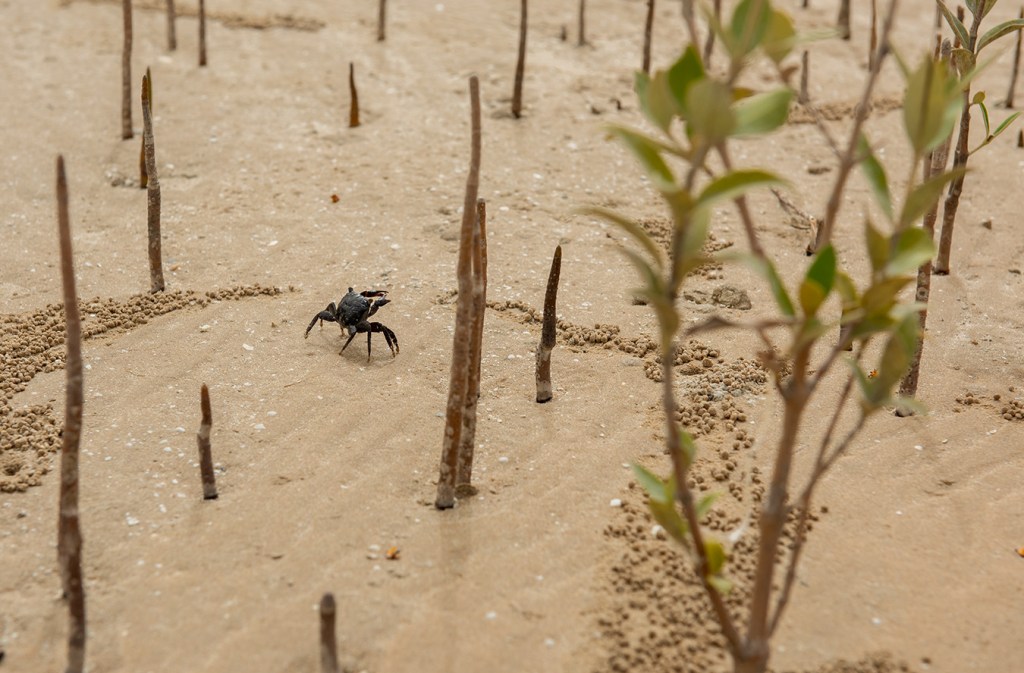
Have you ever walked through a mangrove forest and noticed tiny holes in the mud and lots of little round balls scattered around?
Let’s discover the amazing story behind them and meet one of the mangrove’s smallest but most important heroes, the mangrove crab.
Crabs: Nature’s Eco-Engineers
Some animals don’t just live in nature; they help build it. These animals are called eco-engineers.
Mangrove crabs are eco-engineers because:
- They dig burrows deep into the muddy ground
- These burrows allow air and water to reach mangrove roots
- This helps mangrove trees grow healthy and strong
- Their digging mixes the soil, spreading nutrients everywhere
Just like engineers build roads and tunnels for people, crabs build tunnels that help the entire mangrove ecosystem.
Why Do Crabs Leave Little Mud Balls?
Those tiny balls you see on the mud are not waste; they are signs of life
Here’s what the crab does:
The crab scoops muddy sand into its mouth
It eats the tiny food inside, like algae and plants
The leftover mud is rolled into a small ball
The crab places these balls outside its burrow
These mud balls show us that:
- The soil is rich and healthy
- Crabs are busy cleaning and recycling nature
- The mangrove is a living, breathing home
A Small Crab, A Big Job
Even though mangrove crabs are small, their work makes a big difference. Every burrow they dig and every mud ball they leave behind helps keep the mangrove forest alive.
So next time you visit a mangrove, look closely; you might spot these tiny builders at work!
Nature is full of heroes… Sometimes they just have claws!
 Mangroves Matter